

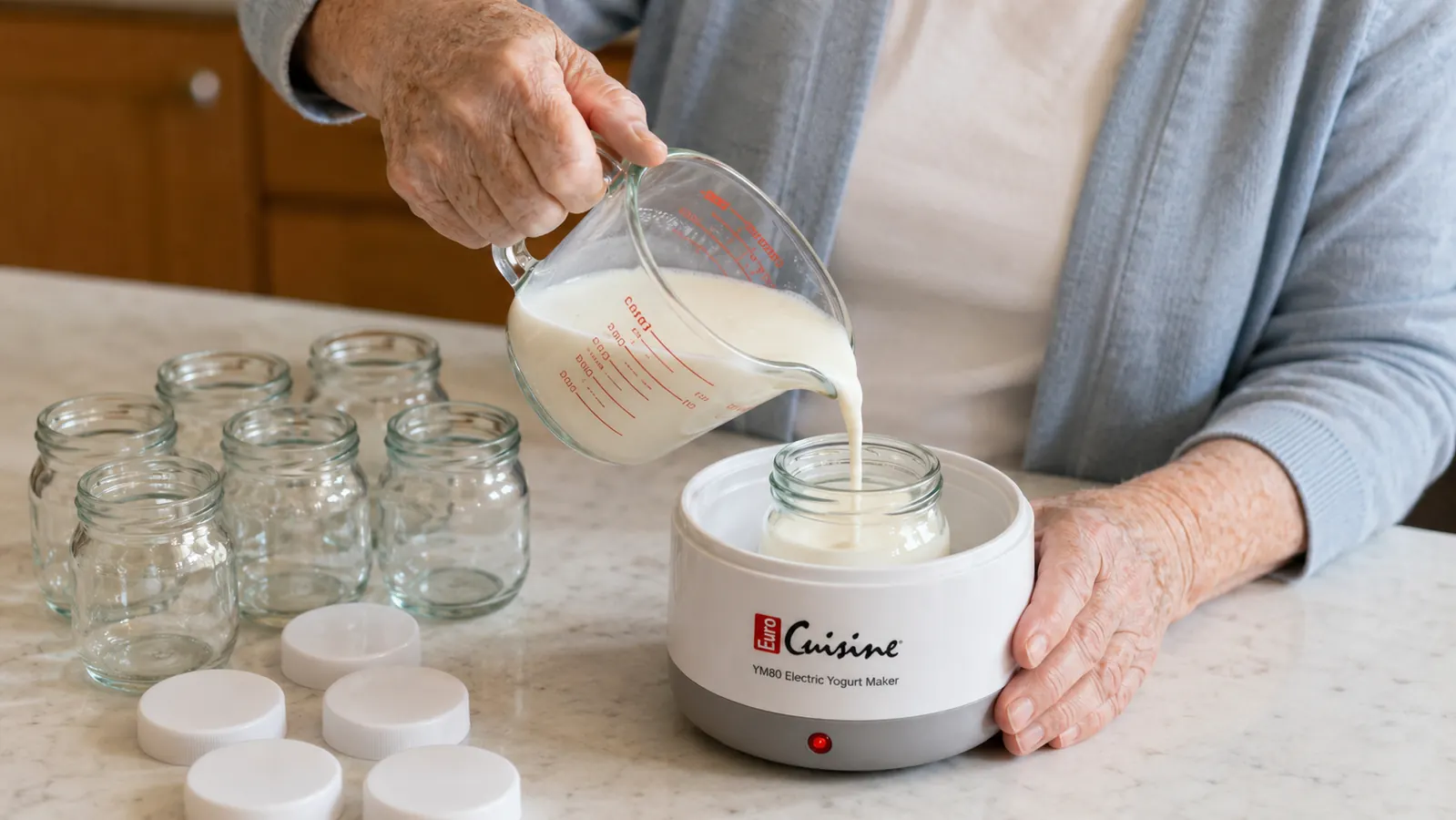
I have about three feet of usable counter in my kitchen, and for years I bought yogurt the way most people do, a plastic tub at a time, reading the ingredient list in the store and not loving what I found there half the time. Sugar, thickeners, and flavors I couldn't pronounce, even in the tubs marketed as the healthy option. My husband found the Euro Cuisine YM80 electric yogurt maker on sale back in February and brought it home without asking me first, which he knows better than to do, but he'd heard me complain about store yogurt often enough that he took the chance. I was skeptical. It's a small white machine with seven little glass jars, and I figured it would sit in a cabinet after two tries like so many other gadgets have.
It's been six months now, and I've made a batch most weeks since, so I think I owe it an honest accounting rather than a rushed first impression. Not a glowing one and not a sour one, just what has actually happened on my counter since February, jars included, lids included, the timer I've gotten wrong more than once.
The Quick Verdict
Six months of near-weekly batches later, the Euro Cuisine yogurt maker has earned a permanent spot in my cabinet. The jars are light and the routine is simple once you settle on your own timing, but it asks more patience and more advance planning than any blender or steamer I own, and the lids have not all aged the same.
Amazon Check Today's Price →Tired of Reading Sugar and Thickeners on Every Yogurt Tub Label?
The Euro Cuisine yogurt maker turns plain milk and a spoonful of starter into seven jars of yogurt you control the ingredients for, no added sugar unless you stir it in yourself. See today's price and current availability on Amazon.
Amazon Check Today's Price on Amazon →How I've Used It
I make a batch about once a week, sometimes every ten days if we're slow to finish the last one. The process is plain once you've done it a handful of times. I warm two quarts of milk on the stove until it's just below a simmer, let it cool to warm bathwater temperature, whisk in a couple spoonfuls of plain yogurt as the starter, and ladle the mixture into the seven glass jars. Those go into the machine, the lid goes on top, and I set the timer and walk away for eight to ten hours. Most weeks I start a batch after dinner and it's ready when I get up.
The machine itself sits on my counter next to the coffee maker most of the week, though I move it into a cabinet on the days I'm not actively fermenting a batch, since it's tall enough to crowd my three feet of space if I leave it out permanently. It's light, maybe four or five pounds with the jars in, and I can lift the whole thing with one hand to wipe underneath it, which matters more to me than it might to someone with stronger wrists.
I should say the listing for this machine leans hard on gut health and probiotic language, and I'm going to leave that alone entirely. I can't tell you what homemade yogurt does inside anybody's body and I'm not going to pretend otherwise. What I can tell you is what I've actually observed after six months of use, the texture, the tang, the cleanup, and whether the thing still works the way it did in February.
Getting the Routine Down
The first month was mostly trial and error. My first batch sat for six hours because I got impatient, and it came out thin and barely tangy, more like sweetened milk than yogurt. My second batch I left for twelve hours overnight, and it was noticeably tangier and thicker, closer to what I remembered from a good tub at the store. It took me until about the fourth or fifth batch to land on nine hours as my sweet spot, thick enough to eat with a spoon, tangy but not sharp.
What I didn't expect was how much the milk itself matters. Whole milk gives a noticeably thicker result than the two percent I usually keep in the fridge, and I've settled on buying whole milk specifically for yogurt night, which is a small extra errand I hadn't planned on. Once I got that piece figured out, the routine stopped feeling like an experiment and started feeling like a Tuesday chore, no different than starting a load of laundry before bed.
The Seven Glass Jars, and What Washing Them Actually Looks Like
Seven jars sounded like a lot of dishes when I first opened the box, and I'll be honest, it is more than the two pieces I wash for my morning smoothie blender. Each jar has its own lid, so a full cycle means washing seven jars and seven lids, fourteen pieces total, once the batch is eaten through and I'm ready to start again. That's real work for hands that don't love scrubbing anymore.
What's made it manageable is that I don't wash all seven at once most weeks. We eat through two or three jars fresh, and I refrigerate the rest, so the washing gets spread out over several days instead of landing in one sink full of glass on a Sunday. All the jars and lids are labeled dishwasher safe, and I run them on the top rack about half the time, hand washing the other half when the dishwasher isn't full enough to bother running. Either way, the glass itself has held up fine, no cracks, no cloudiness, six months in.
The one thing I'd tell anyone before they buy is to expect the jar count as a real commitment, not an afterthought. If you're only making yogurt for yourself and don't mind eating from fewer jars, you could fill three or four and leave the rest empty in the machine, which I've done on weeks I know we won't finish a full batch before it turns.
Whether the Lids Have Held Up
This is where I have to be honest instead of just enthusiastic, because a review that only praises a product isn't worth reading. Of the seven lids, six still seal exactly the way they did on day one, snapping on snug and holding without leaking in the fridge. One has developed a slight warp along the rim, probably from a time I ran it through a hot dishwasher cycle right after it came out of the machine still warm, and that one now sits a little crooked and I've relegated it to the jar I use for leftovers I'm eating within a day or two rather than storing long term.
I've since made a point of letting jars cool to room temperature before they go in the dishwasher, and I haven't had another lid warp since I started doing that. It's a small lesson nobody puts in the instructions, but six months of use taught it to me plainly enough.
How Consistent the Batches Have Stayed
Once I settled on nine hours and whole milk, the results have stayed remarkably even. I'd say four out of five batches come out close to identical, thick enough to hold a spoon standing up for a second before it tips, mild tang, no separation of watery liquid on top unless I let a jar sit in the fridge more than a week before eating it. That fifth batch that comes out different is usually my own fault, milk that was a touch too hot when I added the starter, or a starter spoonful that had been sitting open in the fridge too long and lost some of its strength.
The machine's heating element hasn't shown any sign of running hot or cold compared to those early batches. I don't have a thermometer in there to give you an exact number, but the outcome, meaning how thick and how tangy a nine-hour batch comes out, has been consistent enough that I trust it now the way I didn't trust it in March.
Keeping a Starter Going
The idea is simple in theory. Save a couple spoonfuls of your current batch, use it to start the next one, and in theory you never have to buy a starter culture again. In practice, I've found the starter weakens after four or five generations, the tang gets fainter and the set gets looser, until eventually a batch comes out closer to warm milk than yogurt. When that happens I buy a fresh small container of plain yogurt from the store, use that as a reset starter, and I'm back to strong results for another handful of batches.
I keep my working starter in a small labeled jar in the fridge door, separate from the batches we're actually eating, so I don't accidentally spoon it all onto cereal one morning. That's a habit I'd recommend to anyone starting out, because I did exactly that once in April and had to buy a fresh starter a generation earlier than planned.
Alternatives I Considered
Before my husband bought this one, I'd looked into using the yogurt setting on a multi-cooker instead of a dedicated machine, since it seemed like one less appliance taking up space. I go through that comparison in more detail in a separate piece on the Euro Cuisine yogurt maker versus a multi-cooker's yogurt setting, but the short version is that the dedicated machine holds a steadier temperature for me and I don't have to give up my multi-cooker for eight or nine hours to make a batch. If you're weighing the reasons to make yogurt at home at all instead of buying it, I lay out more of them in a separate piece on why homemade yogurt appeals to people focused on whole foods.

What Different Milk Has Done to the Batches
I mentioned that whole milk sets thicker than the two percent I keep for coffee, and that's held true every time I've tested it side by side these six months. What caught me off guard was the week I grabbed ultra-pasteurized milk from the health food store without checking the carton closely, thinking it was the same as my usual. That batch came out noticeably looser, even after a full nine hours, closer to a soft custard than a set yogurt. A little reading afterward told me the higher heat used to ultra-pasteurize milk changes the proteins so they set less firmly, which matched what I saw in the jar closely enough that I don't buy that carton anymore.
Now I check the fine print before I buy, and I've stuck with regular whole milk, pasteurized but not ultra-pasteurized, from the same dairy case every time. It's a five-second habit I didn't used to bother with, but it's kept me from another loose, custardy batch since, the kind of small lesson only enough weeks can teach you.
Straining It Thicker, and What I Do With the Liquid That Drains Off
Most weeks I eat it straight from the jar, but every so often, especially for company, I'll ladle one jar into a fine mesh strainer lined with a folded coffee filter over a bowl and let it sit in the fridge an hour or two. What comes out is noticeably thicker, closer to soft cream cheese than spoonable yogurt, and it holds its shape well enough to dollop rather than pour. I don't do this every batch, it's an extra bowl and strainer to wash, but it's a nice option when I want something richer for a particular meal or a guest staying the weekend.
The liquid that drains off, the whey, I've stopped pouring down the drain. I use it in place of some water when I make biscuits or bread, and my husband says the crust browns a touch better for it. On weeks I'm not baking, I'll water a couple of my potted herbs on the porch with it instead. At the table I keep the yogurt plain most nights, a spoonful over sliced fruit or a drizzle of honey stirred in, since the whole reason I started this was to stop reaching for tubs with a long ingredient list.
What I Liked
- Light enough for me to lift with one hand, base and jars included
- Only milk and a starter go in, so I control exactly what ends up in the yogurt
- Six months of near-weekly batches with no drop in how the machine heats
- Glass jars have held up with no cracks or cloudiness despite regular dishwasher use
- Spreading out the seven jars means washing never lands all at once
Where It Falls Short
- Fourteen total pieces to wash across seven jars and seven lids on a full cycle
- One of seven lids has warped slightly from being dishwashered while still warm
- Starter weakens after four or five generations and needs a fresh reset
- Takes eight to ten hours per batch, so it asks for planning ahead, not same-day results
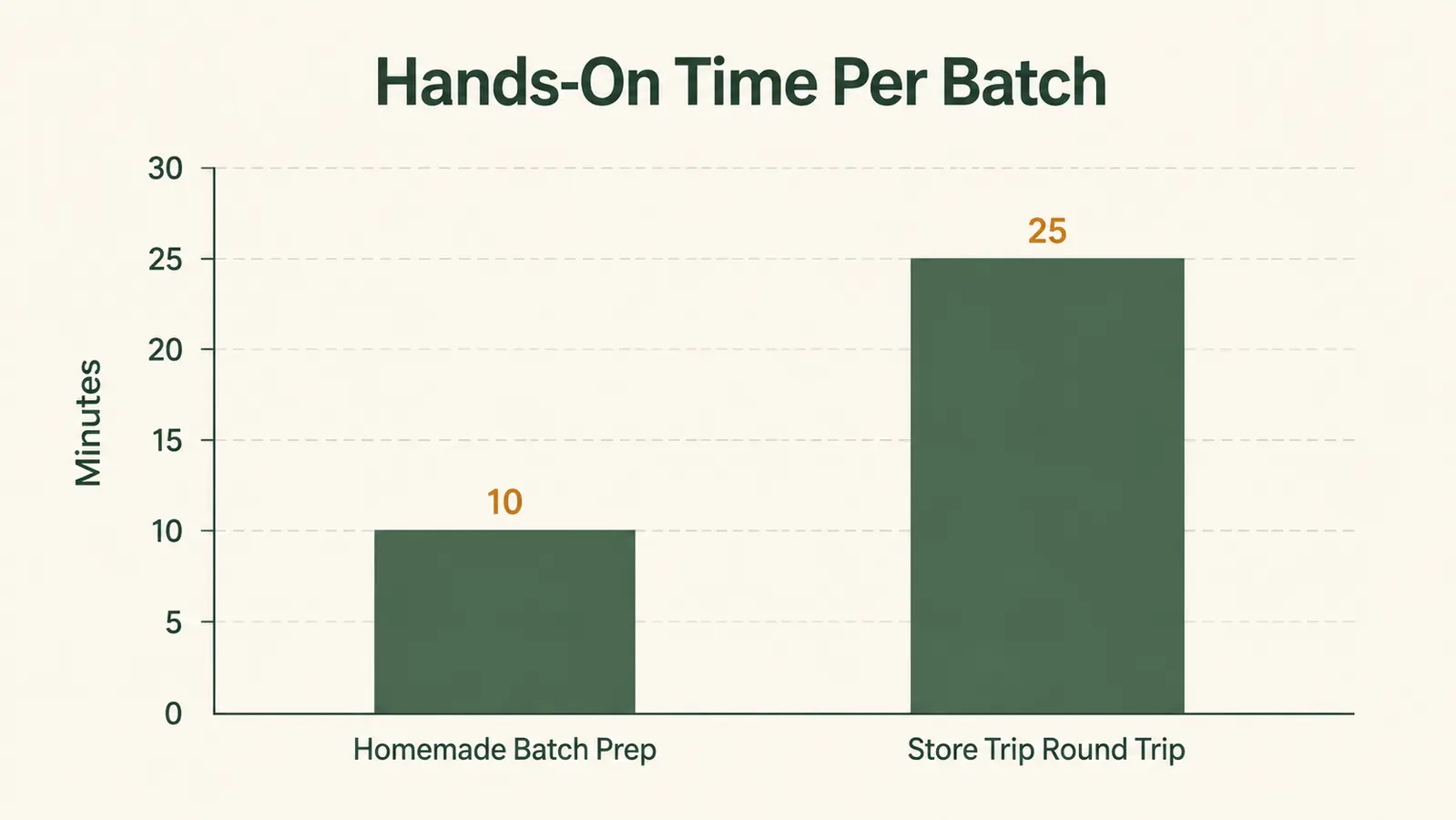
It didn't make yogurt-making effortless. It made it a Tuesday chore instead of a trip to the store, and after six months that's a trade I'd make again.
Who This Is For
This is for anyone who reads yogurt tub labels and doesn't love what's on them, and who doesn't mind a little advance planning in exchange for controlling exactly what goes into the jar. If you cook for one or two people and don't need a large batch all at once, seven small jars is a manageable amount, and if you're patient with a routine that takes a week or two to settle into, the consistency is real once you find your own timing.
Who Should Skip It
If you want yogurt the same day you decide you want it, this isn't built for that, the fermenting time alone rules out anything same-day. And if fourteen small pieces of glass and plastic sounds like more dishwashing than you're willing to take on regularly, a store tub will always be less work, even if it costs you more control over the ingredients.
Ready to Control What's Actually in Your Yogurt?
Six months in, this is still the appliance I reach for most weeks instead of a plastic tub with a long ingredient list. Check today's price on Amazon and see if it's in stock.
Amazon Check Today's Price on Amazon →