
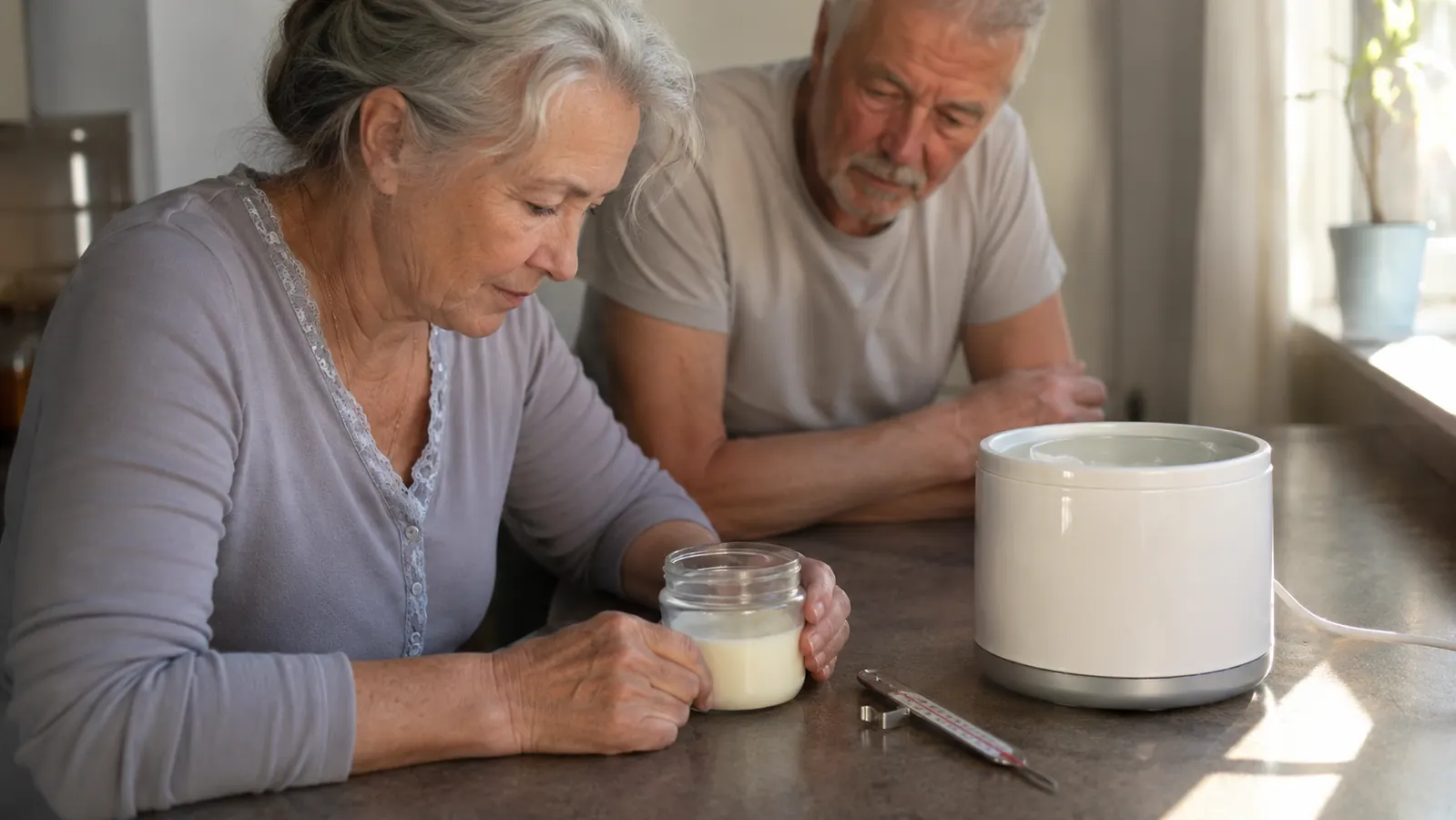
My husband already talked me into writing the six-month version of this review elsewhere on the site, jars, lids, and all. This one is different on purpose. Before I bought the Euro Cuisine YM80 electric yogurt maker, I read probably a dozen five-star reviews of it, and nearly every one described the same tidy morning: warm milk in, jars in the machine, walk away, wake up to yogurt. Nobody mentioned that my first real batch came out closer to warm, faintly tangy milk than anything I'd call yogurt, and that the reason had nothing to do with the recipe. It had to do with how warm my kitchen happened to be that particular week, which the box never says a word about.
I've had the Euro Cuisine on my counter for the better part of a year now, long enough to have made every mistake there is to make with it. A review that only lists the good parts does a disservice to whoever is deciding whether to spend the money. So this is the honest one, the one that tells you what the glowing reviews and the listing photos leave out, what actually sends this machine back to Amazon in a box, and who should save the trouble and keep buying yogurt at the store.
The Quick Verdict
It works, but it asks you to understand two things the instructions barely mention, your kitchen's temperature and your milk prep, before it works well. Skip either one and you'll swear the machine is broken.
Amazon Check Today's Price →Before You Buy It, Know What the Instructions Don't Tell You
This yogurt maker isn't the plug-and-forget appliance the marketing photos suggest. See today's price and current availability on Amazon, then keep reading for the parts nobody puts in the bullet points.
Amazon Check Today's Price on Amazon →How I've Actually Used It, Mistakes Included
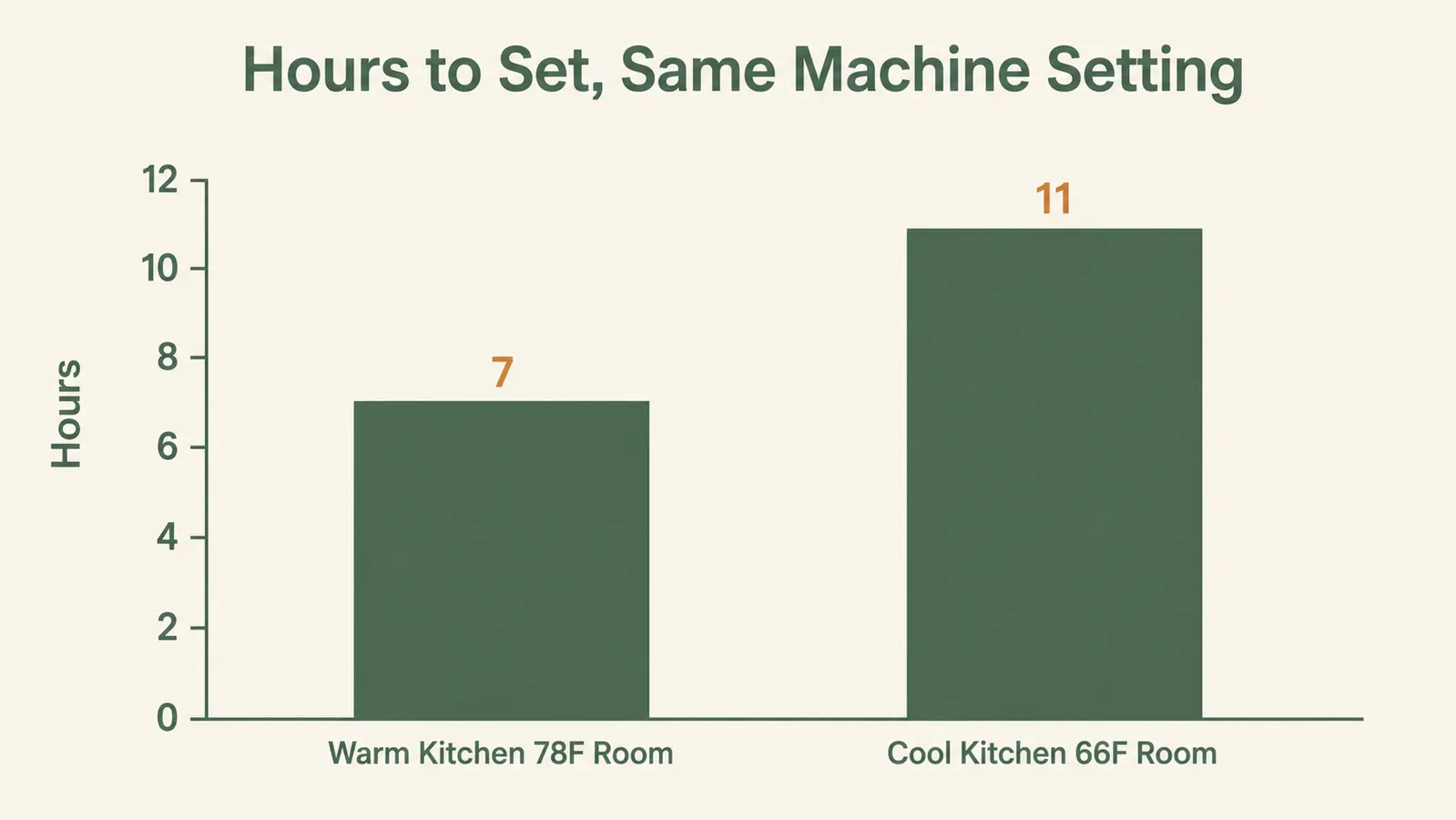
The worst batch I ever made happened during a stretch of hot weather in July, in a back kitchen that doesn't get much airflow and has no air conditioning vent of its own. I ran the exact same routine I'd been running for weeks, same milk, same starter amount, same nine hours in the machine. What came out was sour, thin, and separated into a watery layer on top with a curdled mess underneath, nothing like the batches I'd been proud of the month before. I genuinely thought I'd done something wrong with the starter, and I nearly threw the whole thing out and gave up on the machine entirely that week.
The opposite happened that January. Same nine hours, same everything, except my kitchen counter sits near a drafty window and the room ran cooler than usual during a cold snap. That batch barely set at all, more like a thin pudding than yogurt, and I had to leave it in for two extra hours just to get something spoonable. Two batches, identical steps on paper, wildly different results, and it took me embarrassingly long to connect both failures to the same cause, which is that this machine does not adjust for the room it's sitting in.
For a while I did what a lot of people probably do when a new gadget disappoints them twice in a row, I stopped using it. It sat in the cabinet for close to a month while I went back to buying tubs at the store and telling myself the whole experiment had been a waste of counter space. What got me trying again wasn't a new recipe, it was a conversation with a neighbor who'd had the exact same swings with her own machine and had figured out, on her own, that the room was the variable, not the recipe. That's the piece of information I wish had come printed on a card inside the box instead of learned secondhand a month later.
It's a Warm Box, Not a Thermostat
Here's what I wish someone had told me plainly before I bought it. This machine holds a roughly constant warmth inside the base once it's plugged in. There's no digital readout, no dial you set to a specific number of degrees, and nothing that senses your kitchen and compensates for it. It's a warm box, not a thermostat, and the fermentation that happens inside your jars is the product of that warmth plus whatever temperature your kitchen was already sitting at when you started. A machine that actively regulated for room temperature would cost quite a bit more than this one does, and I don't think that's a flaw exactly, but the listing photos and the breezy instructions make it sound far more precise and hands-off than it actually is.
Once I understood that, I stopped blaming the Euro Cuisine and started checking my kitchen thermometer before I start a batch, the same little dial one I use for canning. Warmer room, I check it closer to seven or eight hours instead of walking away for the full stretch. Cooler room, I plan on it running longer and don't panic if it's still loose at the nine-hour mark. It's a workable system now, but it's a system I had to build myself, and nothing in the box hinted that I'd need one.
I also moved where the machine sits. It used to live right by that drafty window because that's where I had an outlet free, and once I understood the draft was working against me, I ran an extension cord to a spot closer to the interior of the kitchen instead. That one small change made my results steadier through the winter than any adjustment to timing ever did, and it cost me nothing but a longer cord.
The Milk Prep Is the Real Work, Not the Machine
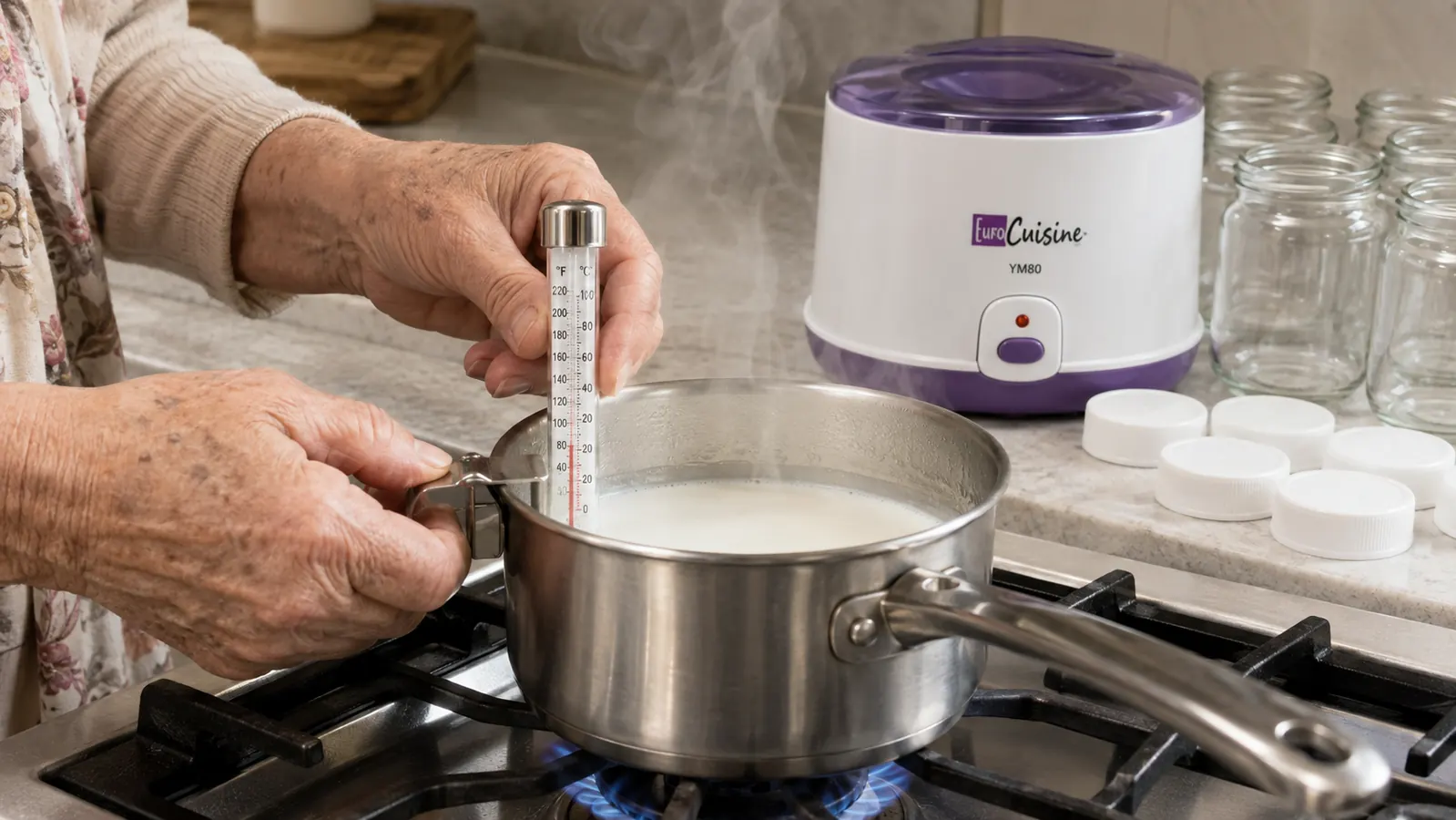
The instructions make it sound like the machine does the work and you just supply warm milk. What actually takes the time, and what I think the marketing badly undersells, is everything that happens on my stovetop before the jars ever go in. Milk needs to be scalded, heated close to a near boil and held there briefly, then cooled back down to a warm bath temperature before the starter goes in. That's a good twenty minutes of standing at the stove with a thermometer clipped to the pot, watching it, not walking away, which is a very different picture than the box's description of the process.
I found out how much that step matters the hard way. One evening I was running late for an appointment and decided to skip the full scald, just warming the milk gently in the microwave instead since it felt close enough to warm. That batch never set at all, not thin, not loose, just milk with a faint sour smell after ten full hours in the machine. Two quarts of milk, wasted, because scalding does something to the proteins in the milk that a quick warm-up in the microwave simply doesn't accomplish. It isn't only about temperature, it's about what that near-boil does to the milk structurally, and skipping it doesn't just slow things down, it can keep a batch from setting at all.
There's also a saucepan and a thermometer added to the cleanup every single time, on top of whatever the machine itself requires, and that pan tends to get a thin scorched ring at the bottom if I look away for even a minute while it's heating. It's not a heavy pot to scrub, but it's one more thing at the sink that a description like pour milk into jars conveniently leaves out of the picture entirely.
The Yogurt Is Thin Unless You Strain It
This is the part that surprised me most, and I think it's the single biggest gap between what the listing photos show and what actually comes out of these jars. A batch straight out of the machine, even a good one that's set properly, is loose. It's closer to a drinkable buttermilk or a thin custard than the thick, spoon-standing-upright yogurt in a lot of the product photography I saw before buying. If you want that thicker, Greek-style texture, and I do, you have to strain it yourself afterward, ladling the yogurt into a fine strainer lined with folded cheesecloth set over a bowl and letting the whey drip out for an hour or two.
That straining step isn't in the instructions, isn't mentioned on the box, and adds real cleanup, a strainer, cheesecloth I have to wash and dry between uses, a bowl to catch the whey, and a decision about what to do with that whey afterward, since I hate pouring anything useful down the drain. It's not difficult, but it's an extra half hour of hands-on time that the marketing photography conveniently skips right over, letting the finished, strained product stand in for what actually comes out of the machine.
Why My Results Stayed Inconsistent for Two Months
Looking back, both of the things I've described above, room temperature and milk prep, were working against me at the same time for most of my first two months owning this machine, and I didn't have either one isolated as the culprit. A batch would come out fine on a Tuesday and disappointing on the following Tuesday with what felt like the identical routine, and I chalked it up to the machine being unreliable rather than to my kitchen running five or six degrees warmer or cooler than the week before, or to a scald I'd rushed because I was in a hurry. Once I started paying attention to both variables on purpose instead of assuming the machine would handle it, the results steadied out considerably. But that's a real learning curve, not a plug-and-play appliance, and I don't think it's fair to a first-time buyer to pretend otherwise.

Who Actually Returns This and Why
Based on what I've read in other reviews and heard from a friend at my church who tried one after I mentioned mine, the returns seem to fall into a few honest categories. The first is people expecting the thick, Greek-style texture from the listing photos straight out of the jar, without realizing they'll need to strain it themselves. They open a jar, find something more like a thin custard, and assume the machine failed rather than that a normal, unadvertised step was skipped.
The second is people hoping for something closer to a sous vide, with a digital display and a precise temperature setting they can dial in and trust regardless of the season. This machine doesn't offer that, and in a kitchen that swings from a warm summer afternoon to a cold winter morning, the lack of any temperature compensation is a real limitation for someone who wants consistent, hands-off results without paying attention to the room.
The third group is people who took the marketing at its word, that this is a pour-milk-and-walk-away appliance, and were caught off guard by the stovetop scalding and cooling that has to happen first. If you don't already enjoy that kind of stovetop attention, or you genuinely don't have twenty extra minutes most evenings, the actual time commitment here is going to feel like a bait and switch compared to what the box implies.
There's a smaller fourth group I'd add from my own experience, people who don't already own a kitchen thermometer or a candy thermometer and feel nickel-and-dimed having to go buy one just to get the milk temperature right. I already had mine from years of canning, so it didn't feel like an extra cost to me, but I understand why a first-time buyer who has to add that to the order feels like the true price of this machine is a little higher than the number on the listing.
What I Liked
- Once you learn your kitchen's temperature swings, results become genuinely predictable
- Milk and a starter are the only ingredients, so you control what actually goes in
- Small enough footprint for a limited counter, and light enough to move with one hand
- Straining, while an extra step, gets you real Greek-style thickness if that's what you want
Where It Falls Short
- No thermostat or temperature compensation, so ambient room temperature changes your results
- Real hands-on milk prep of about twenty minutes at the stove that the marketing glosses over
- Yogurt straight from the jar is thin, not the thick texture shown in listing photos
- First two months come with a genuine learning curve most reviews don't mention
- A kitchen or candy thermometer is effectively required, and it isn't included
The five-star reviews aren't lying. They just skip the twenty minutes at the stove and the two batches I nearly threw out before I understood what this machine actually needed from me.
Who This Is For
This is for someone willing to treat the first several batches as figuring the machine out rather than judging it, and who doesn't mind an active stovetop step before the passive fermenting part even begins. If you're the kind of cook who already keeps a candy thermometer in a drawer and doesn't mind checking a batch a little early on a warm day or leaving it in a little longer on a cold one, the results are genuinely satisfying once you've got your own kitchen's rhythm down.
Who Should Skip It
If you want a thick, spoonable yogurt straight out of the jar with no straining step, or you were hoping for a set-it-and-forget-it appliance that doesn't care what temperature your kitchen happens to be, I'd steer you elsewhere. You can read the full story of why I decided to try making yogurt at home in the first place in the story behind why I bought a yogurt maker, and I walk through the whole process start to finish, straining included, in the step-by-step process I actually follow. If either of those still sounds like more attention than you want to give an appliance on a regular Tuesday, a store tub will always be less work, even if it costs you the control over what's in it.
Still Sound Worth the Learning Curve? Here's Where to Check Stock.
Once you've got your kitchen's rhythm figured out, this earns its spot on the counter. Check today's price on Amazon and see if it's currently available.
Amazon Check Today's Price on Amazon →