

Before I bought the NutriBullet Personal Blender, I read something like thirty reviews on Amazon, and nearly every one of them told a version of the same story. Quiet countertop convenience. Whole ingredients turned into a smooth drink in twenty seconds. Two pieces to wash and you're done. I already wrote up my own six month version of that story elsewhere on this site, and most of it holds up. What I want to do here is different. This is the review I wish I'd read before I spent my own money on the 600 watt, 24 ounce model, the one that tells you what the listing photos leave out, the mistakes I made trusting the marketing a little too much, and honestly, why I suspect some of the people leaving one and two star reviews aren't wrong so much as they bought it expecting something it was never built to be.
I'm not walking any of it back. I still use mine most mornings and I still think it was money well spent for how I cook. But there's a real difference between a fair review and a flattering one, and I'd rather be the second review you read, the one after the glowing one, than have you find out the hard way what I found out. So consider this the version with the fine print left in.
The Quick Verdict
A genuinely useful small blender once you learn its limits, but the listing photos oversell how effortlessly it handles whole, unchopped ingredients, and it is a one-cup-at-a-time machine no matter how the marketing photos frame it.
Amazon Check Today's Price →Read This Before the Listing Photos Talk You Into Anything
The NutriBullet Personal Blender genuinely earns its spot on a small counter, but a few things about it only show up after you've owned it a while. See today's price and current availability on Amazon, then keep reading for the honest side.
Amazon Check Today's Price on Amazon →How I've Actually Used It, Marketing Claims Aside
My husband bought this for me back in February after watching me quietly give up on smoothies for years because my old full-size blender was too much trouble to bother with. I use the NutriBullet most mornings now, usually greens, half a banana, and whatever frozen fruit is in the freezer. That part of the story is genuinely good and I've told it in more detail in my longer piece on this site. What I haven't told anywhere yet is what happened the second week I owned it, when I decided to trust the demo video a little too much.
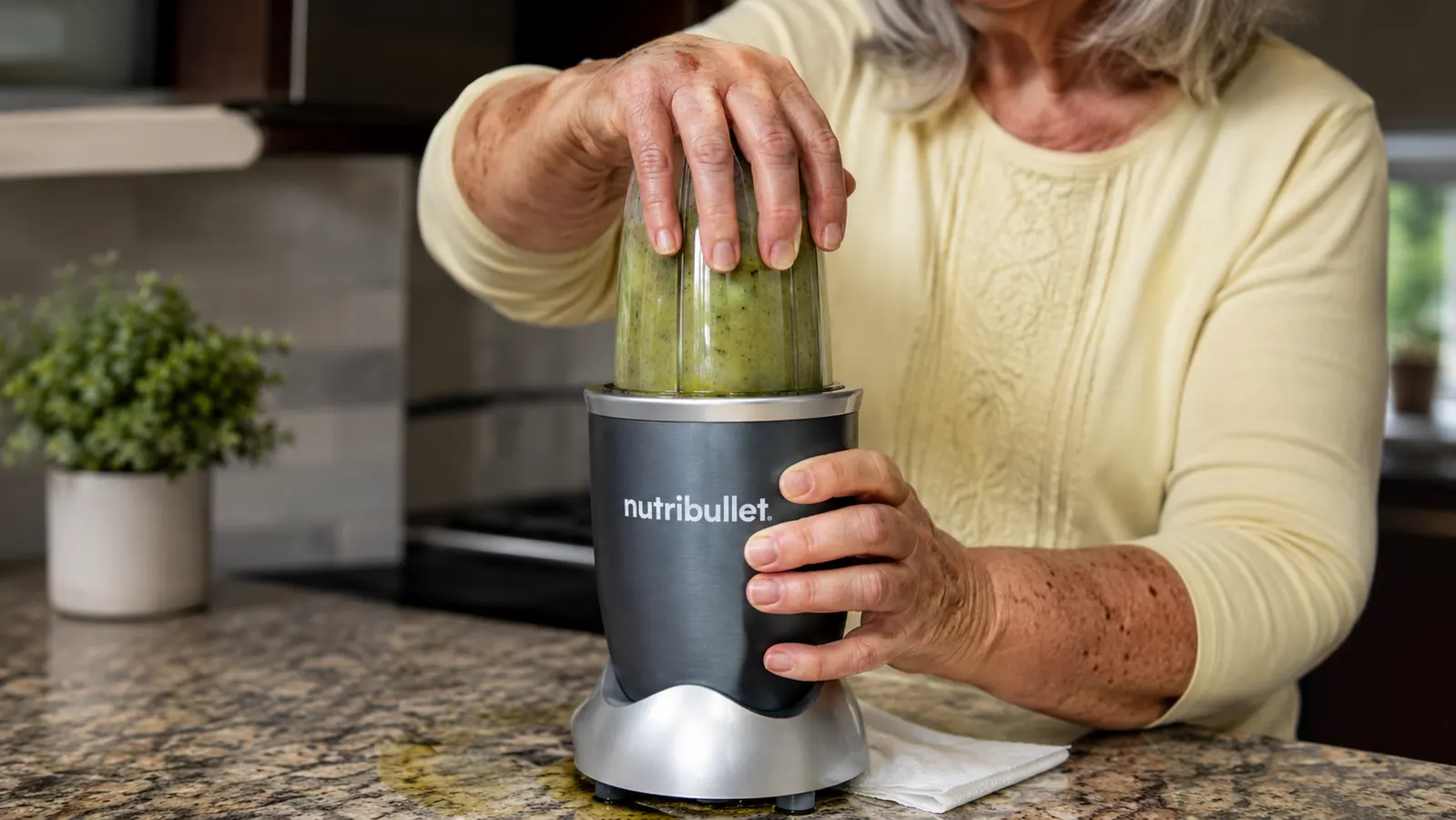
The listing shows the blade tearing through what looks like a whole chunk of frozen mango and a full stalk of something green without a second of hesitation. So on a Sunday, feeling ambitious, I dropped in a whole trimmed celery stalk, unchopped, the way the photo seemed to suggest was fine. The motor bogged down almost immediately, the cup rocked under my hand, and when I lifted it off the base to check, a thin ring of green liquid had worked its way out around the seal and run down the outside of the cup onto my counter. Nothing dramatic, no mess I couldn't wipe up in ten seconds, but it was not the clean twenty second blend the listing had led me to expect, and it happened because I trusted a marketing photo over common sense.
Since then I keep a small folded paper towel tucked under the base most mornings, more out of habit than necessity, because I've since learned to chop anything fibrous into smaller pieces before it goes anywhere near the cup. That's not a complaint about the machine failing at its job. It's a complaint about a listing that shows you the best possible outcome and lets you assume that's the typical one.
What the Listing Photos Don't Show You
The product photos always show this blender sitting alone on a clean, bare counter, usually granite, usually with nothing else in the frame. What they don't show is that there's no rubber foot or splash guard under the base to catch drips, so if you overfill even slightly or the seal isn't seated perfectly, whatever leaks runs straight onto your countertop rather than pooling somewhere contained. On my counter, which is tile, not granite, that's meant a quick wipe most mornings rather than the spotless routine the photos imply.
The cord is also shorter than I expected from the pictures, which never show an outlet at all. My kitchen outlet sits a bit farther from where I'd naturally want to set this up, near the window where the morning light is nice, so I've ended up keeping it closer to the stove than I'd prefer, plugged into the outlet that's actually within reach. It's a small thing, but nobody photographs a blender next to its own power cord stretched to its limit, and it's exactly the kind of detail that only shows up once the box is open and you're trying to find it a permanent home.
There's also the rubber gasket ring on the blade piece, which I didn't think much about at first. If I don't fully separate it from the blade and let it air dry after every use, it can hold a faint smell, banana one week, garlic from a dressing another week, longer than I'd like. It isn't described anywhere on the listing as something that needs weekly attention beyond a rinse, but I've learned to pop that little ring off and wash it separately every few days or the smell lingers into the next smoothie.
One more thing nobody mentions on the listing itself: the cup and blade are what wear out first, not the motor. Mine still runs the same as it did in February, but the plastic on the cup has gone slightly cloudy from ice use, and I've read enough other reviews to know that a cracked cup or a blade seal that no longer sits tight is the eventual failure point on these, not the base underneath. NutriBullet does sell replacement cups and blade pieces separately, which is worth knowing exists, but the listing doesn't tell you to plan for it. I haven't needed one yet, but I've mentally filed it away the way I would a filter on a coffee maker, something I'll eventually replace rather than something included forever.
The Mistakes I Made Trusting the Marketing
Beyond the celery incident, my second real misjudgment was assuming the included recipe booklet would match how I actually eat. It leans heavily on protein powder blends and pre-made shake mixes, which isn't the whole-food direction I bought this for in the first place. I ended up ignoring the booklet within the first week and building my own short list of combinations instead, mostly greens, a little fruit, and ground flax. If you're buying this specifically for whole ingredients the way I was, don't expect the included recipes to reflect that. They're written for a different kind of buyer than I turned out to be.
The third thing I got wrong was assuming this could reasonably serve two people the way our old blender did. It can't, not in one run. This is a single cup, and if my husband wants a smoothie too, I'm either blending a second cup start to finish, which doubles the noise, the mess, and the few minutes it takes, or we're sharing from one cup, which neither of us particularly likes doing at breakfast. The listing calls it a personal blender right in the name, and I read right past that word before I bought it, assuming it just meant compact rather than genuinely built for one serving at a time.
Where It Genuinely Falls Short
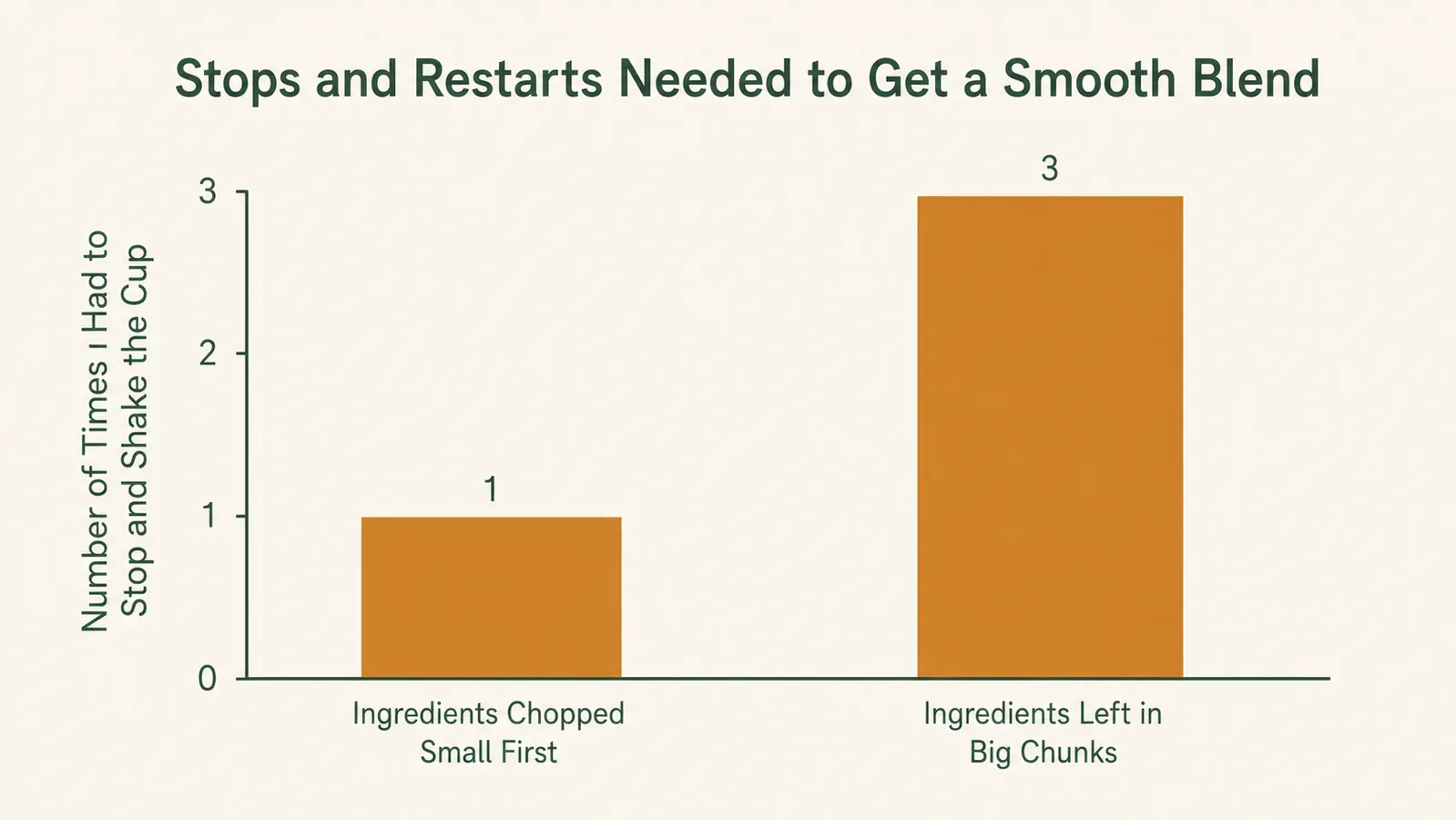
There is exactly one speed. You press the cup down and it runs at full power until you let go, with no pulse setting and no gentle start to ease tougher ingredients in gradually. For soft fruit that's never a problem, but for anything with real fiber, celery, dates, uncooked carrot, the full-power blast can shred it into stringy bits rather than a smooth puree unless you've chopped it down first. My old full-size blender had a pulse button for exactly this reason, and I miss having that option here more than I expected to.
It also isn't built for anything hot. I looked into whether I could puree a small amount of warm cooked vegetables for soup, thinking it would save me pulling out a bigger appliance, and the honest answer is no, this cup and seal aren't rated for hot liquids and I wouldn't risk it regardless of what any workaround suggests online. If soup or hot sauces are part of your regular routine, this isn't the tool for that job, full stop.
And the volume claim needs a caveat too. The cup is labeled 24 ounces, but once you account for the headspace you actually need to leave for the blade to spin without splashing out the top, the practical fill line is noticeably lower than the total capacity suggests. I've learned to fill to about the etched line and not an inch past it, which gives me a solid but not enormous smoothie, smaller than the number on the box might lead you to picture.
Who Actually Returns This and Why
I've read through a good stack of the lower star reviews on Amazon trying to understand the pattern, and a few categories show up again and again. The first is people who bought it to replace a full-size blender entirely, expecting it to crush a full pitcher of ice for a crowd or puree hot soup, and who return it disappointed that a personal-sized cup blender was never built for either job. Reading the name on the box would have saved them the return shipping.
The second group seems to be people whose hands and wrists genuinely struggle with the twist-and-press motion needed to activate it. There's no separate button. You have to seat the cup and press down with real, sustained pressure to get the motor running, and for someone with weaker grip strength or wrist pain, that can be a legitimate deal breaker rather than something you simply get used to. If that describes you or someone you're buying for, I'd genuinely try one in a store before ordering.
The third category is people expecting restaurant-smooth texture from whole, unprepped ingredients every single time, the way the demo photos suggest. Once you understand that fibrous vegetables and larger chunks need a rough chop first, the results are genuinely good. Skip that step and you'll be shaking a lumpy cup and wondering what you did wrong, which is exactly what happened to me with that celery stalk.
There's a fourth group I have some real sympathy for: people who bought this expecting it to save real time in the morning and were disappointed to find that prep time doesn't disappear, it just moves. If your ingredients aren't already washed and roughly cut down, you're doing that work at the cutting board before the blender ever turns on, and the blender itself is only the fast part of the process. For someone who pictured a truly one-step morning, that adjustment can feel like a small letdown, even though the actual blending really is as quick as advertised once the prep is done.
What I Liked
- Small enough to leave out on a tight counter without crowding anything else
- Only two pieces touch food, so daily cleanup really is quick
- Drink straight from the same cup you blend in, one less glass to wash
- Handles soft fruit and greens well once you know to chop the fibrous stuff first
Where It Falls Short
- Demo photos oversell how well it handles whole, unchopped ingredients
- No pulse or speed setting, it's full power or nothing
- Genuinely a one-serving machine, not a two-person blender in a single run
- Not rated for hot liquids, so soup is off the table entirely
- Requires real, sustained hand pressure to activate, which won't work for everyone
- Rubber gasket needs separate washing or it holds odors
The five-star reviews aren't lying about what this blender does well. They're just not telling you about the celery stalk, the shared cup at breakfast, or the recipe booklet full of protein shakes I never asked for.

Who This Is For
This makes sense for someone cooking mostly for themselves, or willing to run it twice for a spouse, who is genuinely committed to prepping ingredients rather than tossing whole chunks in and hoping for the best. If you already chop your produce for other reasons, or you're the kind of cook who reads the fine print rather than the demo photo, the honest gaps I've listed here won't surprise you much and the blender itself does its actual job well. I go through the everyday case for this size of blender in a separate piece on making whole-food smoothies for one, and my fuller six-month account is in my long-term NutriBullet review.
Who Should Skip It
If you're regularly cooking for more than two people, want hot soup out of the same appliance, or have real difficulty with a firm, sustained twisting and pressing motion, I'd look elsewhere before you buy this one. And if you're drawn in mainly by how effortlessly the demo photos show it handling whole fruit and vegetables, go in expecting to do a little more chopping than the marketing suggests, or the first disappointing blend might be enough to make you box it back up before you've really given it a fair try. If you're weighing this against a similar personal blender, I laid out the differences honestly in NutriBullet versus the Magic Bullet blender, and the story of why I ended up needing one in the first place is in the piece on why I finally gave in and bought a personal blender.
Still Sounds Like the Right Fit? Here's Where to Check Today's Price.
Chop the fibrous stuff first, keep your expectations to one serving at a time, and this blender earns its spot on a small counter. Check today's price on Amazon and see if it's currently in stock.
Amazon Check Today's Price on Amazon →